



What's up North™, Charlie Nardozzi - It’s Stick Season!
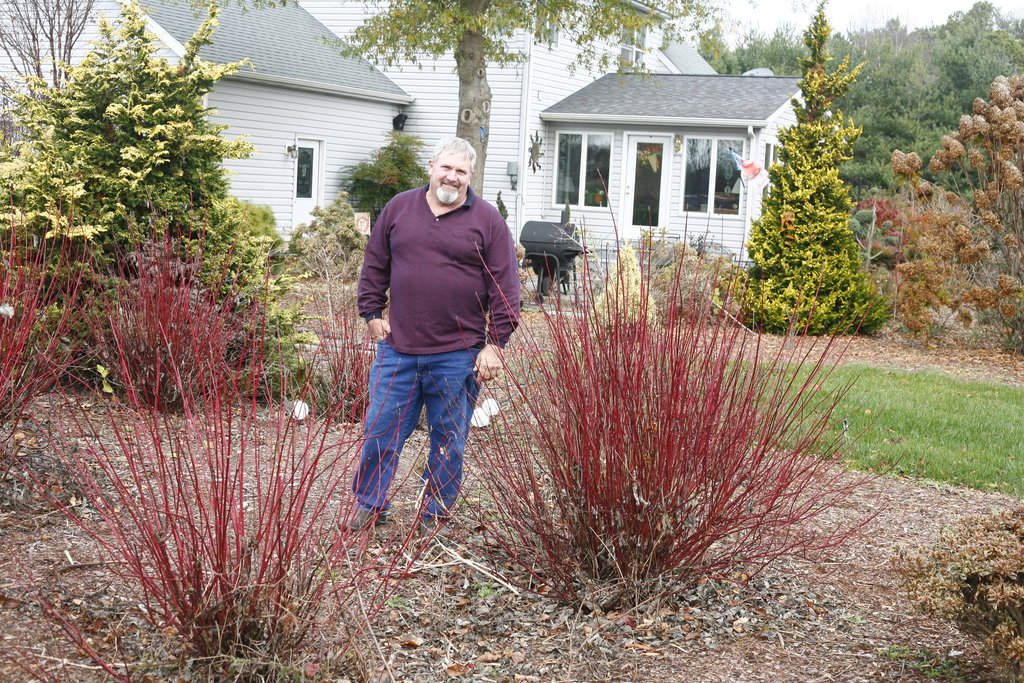
There's an expression in the North called “stick season”. It's that time of year when most of the deciduous trees and shrubs have dropped their leaves but it hasn't started snowing yet. When you look at the landscape, it looks like a bunch of sticks!
It’s Stick Season!
There's an expression in the North called “stick season”. It's that time of year when most of the deciduous trees and shrubs have dropped their leaves but it hasn't started snowing yet. When you look at the landscape, it looks like a bunch of sticks!
Gardeners know these “sticks” can have a beauty all their own. Selecting trees and shrubs with attractive bark can brighten up the landscape in winter. Many of these plants are helpful for insects and wildlife as well. Here are some of my favorite stick season plants.
Shrub dogwoods (Cornus spp) are high on my list of great, tough, northern hardy plants with attractive bark color. They're hardy to zone 2, relatively carefree, deer resistant and shade tolerant. If you love blazing red stems, try Arctic Fire® Red red-osier dogwood (C. stolonifera). This dwarf version of the species stays a tame 3- to 5-feet tall, tolerates a wide range of soils and has bright red stems. There's also a yellow-stemmed version called Arctic Fire® Yellow. The color of shrub dogwood stems is best on young branches. To maintain a colorful display, you can do one of two things: cut the whole plant back to short stubs every other year, or cut out one-third of the oldest stems every year. The oldest bark will turn gray.
Another native shrub with attractive bark is known more for its cheery yellow flowers in summer. Sunny Boulevard® St John's Wort (Hypericum kalmianum) has buttercup-like, yellow flowers that bloom from July to September. The exfoliating bark is revealed once the leaves drop, maintaining winter interest in the snow. This 2- to 3-foot tall shrub is drought and salt tolerant, so it's great for gardens near a road or in an urban landscape.
One of my favorite, lesser known small trees that has beautiful exfoliating bark is Temple of Bloom®seven-son tree (Heptacodium miconioides). This small- to medium-sized, deciduous tree features attractive twisted leaves, fragrant white flowers in August when few other trees are blooming, bright red bracts that appear like a second round of flowers in fall and tan-colored, peeling bark in winter. This tree is easy to grow, and the flowers are favorites of hummingbirds and pollinating insects.
Another medium-sized tree that has colorful bark is the cherry. Like all cherry trees, Pink Snow Showers™weeping cherry (Prunus) has attractive copper-colored bark with white lenticels. Of course, it also has beautiful pink flowers in spring.
Finally, native trees can be beautiful in fall and winter, too. Depending on the species, birch trees can have white, gray, tan or peachy-gold bark. Often, the bark is peeling to reveal various color patterns. I remember as a child peeling sheets of bark from a wild paperbark birch tree to use on a craft project. A good example of an attractive barked birch is Avalanche™ white birch (Betula). This multi-stemmed birch features snow white bark that peels. It's low maintenance and perfect for areas that experience more snowless, brown winters than white ones.