



26 Butterfly Garden Plants for a Welcoming Habitat
Attract these graceful beneficial insects to your yard with butterfly-friendly plants
At a glance
Butterflies find plants by color, shape, pattern and scent, and they prefer red, yellow, orange and purple flowers.
Choose flowers with high nectar content that are easy for butterflies to reach.
Plant a butterfly garden in early spring so plants have time to grow and flower.
Trees, shrubs and perennials provide habitat year after year, while annuals last one growing season.
Attract these graceful beneficial insects to your yard with butterfly-friendly plants
Butterflies are some of the most elegant insects, with their fluttering wings and gliding flight as they flit from flower to flower. It’s no wonder that so many gardeners strive to attract these beautiful creatures into their yards with butterfly plants. In recent years, butterfly population numbers have declined as habitat shrinks due to industrial farming and development. Gardeners can help support butterflies and other pollinators by adding natives and other wildlife-friendly plants with flowers that attract butterflies to their yards.
Butterflies and moths use visual cues such as colors, shapes and patterns, as well as scent to find preferred garden plants that provide food, shelter and places to reproduce. Adult butterflies have specific nutritional needs, feeding on nectar and pollen as a rich source of sugar and nutrients, while their young rely on plant foliage for food and energy.
There are many butterfly plants that gardeners can add to their landscape. Here is a list of butterfly plants for some of the best pollinator garden varieties.

1. LOBELIA
Laguna® Dark Blue
Lobelia erinus
Exposure: Part sun to sun
Zones: 9-11
Lobelia is an ornamental perennial or annual with an upright or trailing habit and prolific clusters of colorful flowers. Laguna® Dark Blue is an annual variety with rich blue flowers and improved heat resistance for a longer bloom time. Lobelia produces open-faced flowers and vivid colors of flowers that attract butterflies.

2. SWEET ALYSSUM
Snow Princess®
Lobularia hybrid
Exposure: Part sun to sun
Zones: 9-11
This tender perennial, most often grown as an annual, is a mat-forming plant with clusters of white, lavender or purple flowers that bloom from late spring into fall. Though not a preferred color of butterflies, the pure white flowers of Snow Princess® have a sweet fragrance and high nectar content that butterflies find appealing.

3. PETUNIA
Supertunia® Bordeaux II™
Petunia hybrid
Exposure: Part sun to sun
Zones: 10-11
One of the most popular flowering annuals, petunias come in a wide range of flower colors and mounding or trailing forms. Supertunias are bred for their vigorous growth habit and exceptionally long bloom time. The vivid-purple hue of Supertunia® Bordeaux™ II is a bright color that butterflies prefer, with flowers that attract butterflies, and bloom continuously during the heat of summer when butterfly breeding is at its peak.

4. VERBENA
Superbena Royale® Plum Wine
Verbena hybrid
Exposure: Part sun to sun
Zones: 8-11
A tender perennial most often grown as an annual, verbena has an upright or trailing habit, with flat-topped flowers that are easy for butterflies to land on. The intense purple-pink blooms of Superbena Royale® Plum Wine are a color that butterflies can easily spot from a distance. The trailing habit is suitable for containers and hanging baskets.

5. BUTTERFLY BUSH
‘Miss Molly’
Buddleia x
Exposure: Full sun
Zones: 5-9
One of the best garden plants for a butterfly, this deciduous shrub attracts many different types of butterflies and other beneficial insects. The long bottlebrush flowers occur throughout the summer during the height of breeding season. ‘Miss Molly’ produces bright reddish-pink flowers, a preferred color of butterflies. This variety is non-invasive, with a smaller size suitable for urban yards. Watch Jenny Simpson’s expert tips on growing butterfly bush.
Watch Jenny Simpson’s expert tips on growing butterfly bush.

6. ROSE OF SHARON
Purple Pillar®
Hibiscus syriacus
Exposure: Sun
Zones: 5-9
This deciduous shrub is grown for the attractive foliage and large trumpet-shaped flowers that lend exotic appeal to the landscape in summer. Purple Pillar® is a unique variety with a columnar habit that’s suitable for smaller spaces. The showy red and purple flowers are highly appealing to hummingbirds, butterflies and other pollinators.
7. REBLOOMING LILAC
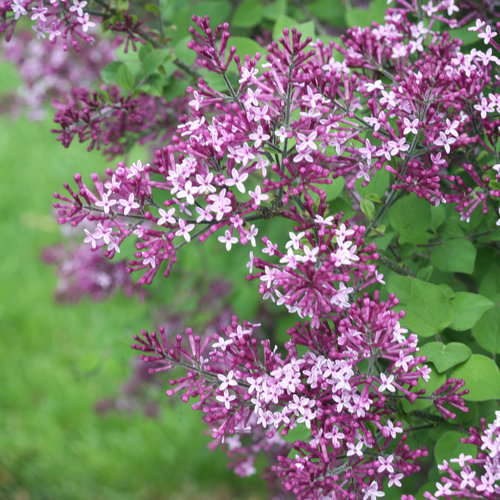
Bloomerang® Dark Purple
Syringa x
Exposure: Sun
Zones: 3-7
Lilac is a hardy deciduous shrub with a bushy habit and clusters of fragrant flowers in spring. Boomerang® Dark Purple has purple flower buds that open to pale lavender flowers for a striking two-toned effect. This reblooming variety flowers in mid- to late spring, and again from summer into fall, providing a long-lasting source of nectar for butterflies such as swallowtails, fritillaries and painted ladies.

8. LAVENDER
Sweet Romance®
Lavandula angustifolia
Exposure: Sun
Zones: 5-7
Lavender is a popular herb grown for the aromatic flowers and foliage with a range of culinary, medicinal and ornamental uses. The compact habit of Sweet Romance® is suitable for containers and small spaces, producing beautiful silvery foliage and deep purple flowers. Lavender has one of the most appealing fragrance profiles for butterflies, attracting many different species.

9. CATMINT
‘Cat’s Meow’
Nepeta faassenii
Exposure: Sun
Zones: 3-8
One of the easiest ornamental perennials to grow, catmint thrives on neglect and is drought tolerant once established. Garden plants have an exceptionally long bloom time, from late spring to fall, providing butterflies a continuous food source for much of the growing season. The compact habit of ‘Cat’s Meow’ is less prone to flopping, with nectar-rich bluish-purple flowers and scented foliage that butterflies love.

10. SHASTA DAISY
Amazing Daisies® Daisy May®
Leucanthemum superbum
Exposure: Sun
Zones: 5-9
This beloved herbaceous perennial is grown for the cheerful white-petaled flowers with sunny yellow centers. The dwarf stature of Amazing Daisies® Daisy May® is suitable for containers and small spaces, with shorter stems that are less prone to flopping. This native plant has nectar-rich flowers, and is adapted to supporting native pollinating insects and butterflies such as swallowtails and skippers.

11. SPIKE SPEEDWELL
Magic Show® ‘Wizard of Ahhs’
Veronica hybrid
Exposure: Part sun to sun
Zones: 4-8
This hardy carefree perennial has an upright or creeping habit, with clusters or spikes of flowers in spring and summer. Magic Show® ‘Wizard of Ahhs’ is a dwarf variety suitable for containers or as border edging. The vibrant violet-blue flowers are a nectar source for hummingbirds, butterflies and other pollinators.

12. FLOSSFLOWER
Artist® Blue
Ageratum hybrid
Exposure: Part sun to sun
Zones: 9-10
Also known as ageratum, this warm-season annual produces fluffy rounded flowers that add charm and whimsy to containers and borders. Artist® Blue has a compact habit, with new foliage that hides spent flowers so there’s no need for deadheading. The nectar-rich flowers provide food sources for butterflies including monarchs and swallowtails from late spring to the first frost.

13. SPIDER FLOWER
Señorita Blanca® II
Cleome hybrid
Exposure: Sun
Zones: 10-11
Also known as cleome, this annual has a tall upright habit, deeply lobed foliage, and showy spider-like flowers. The compact habit of Señorita Blanca® II is suitable for smaller yards, with long-lasting white flowers produced on heat-tolerant plants. Spider flowers are host plants for several types of butterflies, while the nectar-rich blooms provide a continuous food source from planting until frost.

14. LANTANA
Luscious® Citrus Blend™ II
Lantana camara
Exposure: Sun
Zones: 9-11
Lantana is a tender evergreen shrub most often grown as an annual. This flowering plant is one of the best to attract butterflies and other pollinators. The flower clusters bloom continuously from late spring until frost. Luscious® Citrus Blend™ II produces flowers with a light sweet scent in hues of red, orange and yellow that butterflies love.

15. PHLOX
Southern Blaze™ Blueberry
Phlox drummondii
Exposure: Sun
Zones: 10-11
Phlox is a diverse group of perennials and annuals with an upright or creeping habit and sweetly scented star-shaped flowers in different colors. Southern Blaze™ Blueberry is a heat-tolerant annual variety with vivid-blue flowers that occur from planting until frost. This species is native to Texas, Oklahoma and the southeastern US, with flowers that provide a continuous food source for local butterflies and other pollinators.

16. PURSLANE
Mojave® Yellow II
Portulaca umbraticola
Exposure: Sun
Zones: 10-11
This annual succulent has a low creeping habit, producing brightly colored flowers on drought-tolerant plants from summer until frost. The sunny bright yellow flowers of Mojave® Yellow II are a favorite color of butterflies. The trailing habit is suitable for hanging baskets, containers and rock gardens.

17. SALVIA
Rockin’® Fuchsia
Salvia hybrid
Exposure: Part sun to sun
Zones: 9-11
Salvia is a diverse group of ornamental annuals and perennials in a range of growing habits and flower colors. Rockin’® Fuchsia produces tubular flowers with vibrant hot pink coloring that butterflies can see from a distance. The long bloom time helps to support butterflies and other pollinators throughout the warmer months of the growing season.

18. PINKS
‘Paint the Town Red’
Dianthus hybrid
Exposure: Part sun to sun
Zones: 4-9
These quintessential cottage garden plants have a compact habit, with dainty clove-scented flowers in different colors and patterns. The deep magenta-red flowers of ‘Paint the Town Red’ are a color that butterflies love, with an open shape and fragrance for added appeal. Use this versatile annual, perennial or biennial to edge borders, in containers, or mass plantings.

19. DAYLILY
Rainbow Rhythm® ‘Going Bananas’
Hemerocallis hybrid
Exposure: Part sun to sun
Zones: 3-9
One of the most popular flowering perennials, daylily produces trumpet-shaped flowers in a wide range of colors and patterns. Rainbow Rhythm® ‘Going Bananas’ is a reblooming variety with fragrant lemon-yellow flowers that occur throughout summer into fall. Butterflies are attracted to the yellow coloring and light scent.

20. PERENNIAL SUNFLOWER
‘Tuscan Sun’
Heliopsis helianthoides
Exposure: Part sun to sun
Zones: 3-9
Sunflowers are a magnet for butterflies, bees, and other pollinators. While most varieties are annual, ‘Tuscan Sun’ is a perennial plant that comes back every year, producing sunny yellow daisy-like flowers. The compact size is suited to small spaces and containers, with no staking needed. Sunflowers have a high nectar content, and some butterfly larvae also feed on the foliage.

21. BEE BALM
‘Pardon My Cerise’
Monarda didyma
Exposure: Part sun to sun
Zones: 4-8
One of the best flowers for monarchs, swallowtails, fritillaries and painted ladies, bee balm is an herbaceous perennial native to North America, with colorful flowers that resemble fireworks. The dark cherry blooms of ‘Pardon My Cerise’ have high appeal for butterflies and hummingbirds for their vibrant coloring that can be seen from a distance. The petite habit is suitable for small spaces, in containers, and as border edging. Bee balm produces abundant nectar, while the tubular florets provide easy access for butterflies.

22. STONECROP
Rock ’N Grow® ‘Back in Black’
Sedum hybrid
Exposure: Sun
Zones: 3-9
Stonecrop produces abundant clusters of star-shaped flowers that are a magnet for butterflies, bees and other beneficial insects. This drought-tolerant succulent is a reliable late-season food source for migrating monarch butterflies and other pollinators. Rock ’N Grow® ‘Back in Black’, which blooms from late summer into fall, has nearly black foliage that offers stunning contrast to the red flowers.
23. BLUEBEARD
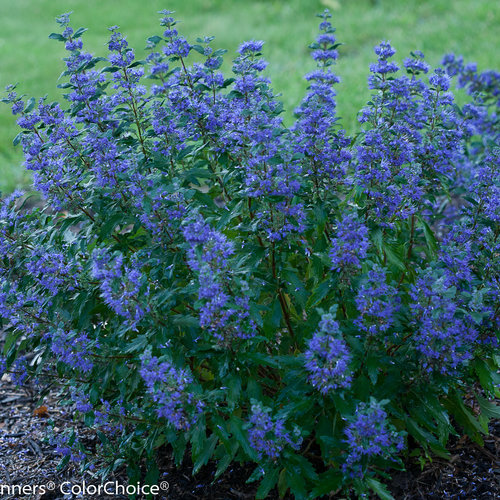
Beyond Midnight®
Caryopteris x clandonensis
Exposure: Sun
Zones: 5-9
Bluebeard is a small deciduous shrub, with blooms from mid-summer into fall that are beloved by many pollinators. The clusters of tubular flowers produce abundant nectar and pollen, providing a late-season food source for bees and butterflies such as monarchs, swallowtails and skippers. The vivid deep-blue flowers of Beyond Midnight® are a color that is especially enticing to butterflies.

24. DIERVILLA
Kodiak® Orange
Diervilla x
Exposure: Full shade to full sun
Zones: 4-7
This little-known deciduous shrub, native to North America, deserves a place in any butterfly garden. Diervilla has colorful foliage, tubular honeysuckle-like flowers from late spring through summer, and fall color for multi-seasonal interest. Kodiak® Orange has orange new growth and fall color, with bright yellow flowers. The nectar-rich blooms have a color and shape that appeal to butterflies, providing a long-lasting food source for swallowtails, painted ladies and red admirals.

25. SWEETSPIRE
Little Henry®
Itea virginica
Exposure: Full shade to full sun
Zones: 5-8
Sweetspire is a native shrub with a graceful arching habit and long spires of fragrant star-shaped flowers that occur in late spring and early summer. The dwarf stature of Little Henry® is useful in small spaces, mixed borders and mass plantings. The nectar-rich fragrant flowers attract and support insect pollinators and butterflies such as swallowtail, common buckeye and red admiral.

26. WEIGELA
Wine & Roses®
Weigela florida
Exposure: Sun
Zones: 4-8
One of the best butterfly-attracting plants, weigela is a carefree deciduous shrub with an elegant growth habit, colorful foliage, and prolific flowers. The flowers occur in mid-spring, with sporadic rebloom in summer and fall. The dark purple foliage of Wine & Roses® provides a dramatic backdrop to the vivid rose-pink flowers. Butterflies are drawn to the bright color and tubular shape of the flowers, which provide a long-lasting food source.
FAQs
What garden plants attract butterflies?
Garden plants that support the butterfly life cycle are most likely to attract butterflies, providing nectar for adult butterflies, a place for laying their eggs, and foliage that young larvae and caterpillars can feed on. Individual butterfly species have different needs and preferences.
Laura Leboutillier of Garden Answer shares her tips on how to plant a butterfly garden.
What type of flowers do butterflies like?
Flowers with particular colors, shapes, patterns and scents are most likely to attract butterflies. Garden plants that butterflies like have flowers with a high nectar content that are easy to access.
Try these pollinator-friendly perennials as Janey Santos of Dig, Plant, Water, Repeat shares some of her favorites.
What time of year should I plant a butterfly garden?
The best time to plant a butterfly garden is in early spring to allow time for garden plants to grow and flower. Trees, shrubs and perennials will provide butterfly habitat from year to year, while annuals last just one growing season.
What colors attract butterflies the most?
Butterflies are most attracted to vivid colors they can spot from a distance as they are flying. Preferred colors are red, yellow, orange and purple.
What plants attract butterflies and hummingbirds?
Hummingbirds, butterflies, and other beneficial insects are drawn to plants that offer abundant food sources and are easy to feed from. Hummingbirds favor tubular flowers that accommodate their long, slender beaks. Butterfly flowers include those with a flat or dome shape and clusters of tubular florets that are easy to access with their proboscis. Flat-topped flowers such as yarrow, lantana, and verbena also provide a safe place for butterflies to perch while feeding. Native plants and wildflowers are especially valuable in pollinator gardens, as they have co-evolved with local butterfly species and are adapted to meet their specific nutritional and reproductive needs.
Heather Blackmore of Here She Grows shares some of her favorite plants that are low maintenance, long blooming and pollinator friendly.